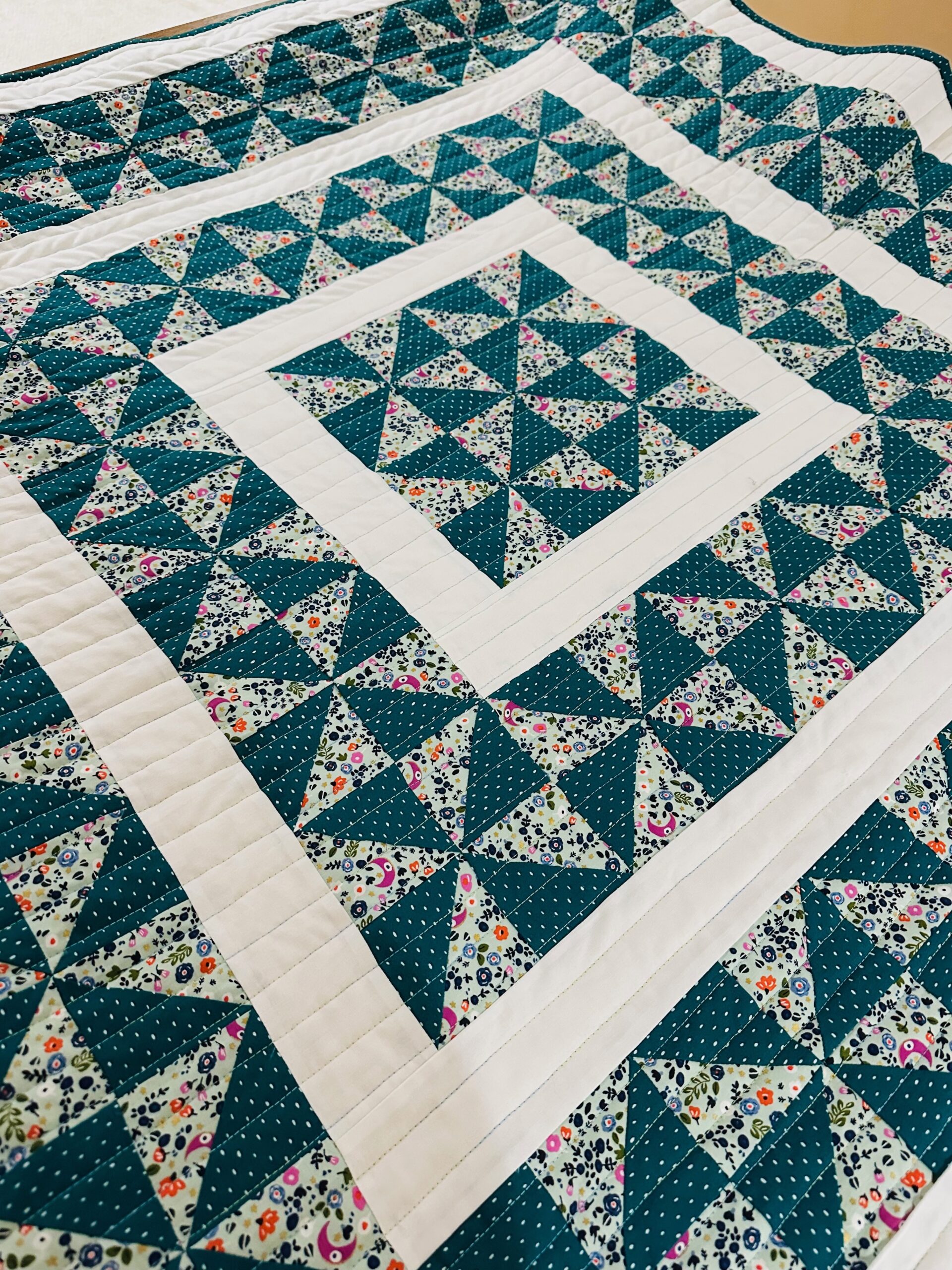
The Versatile Pinwheel Block
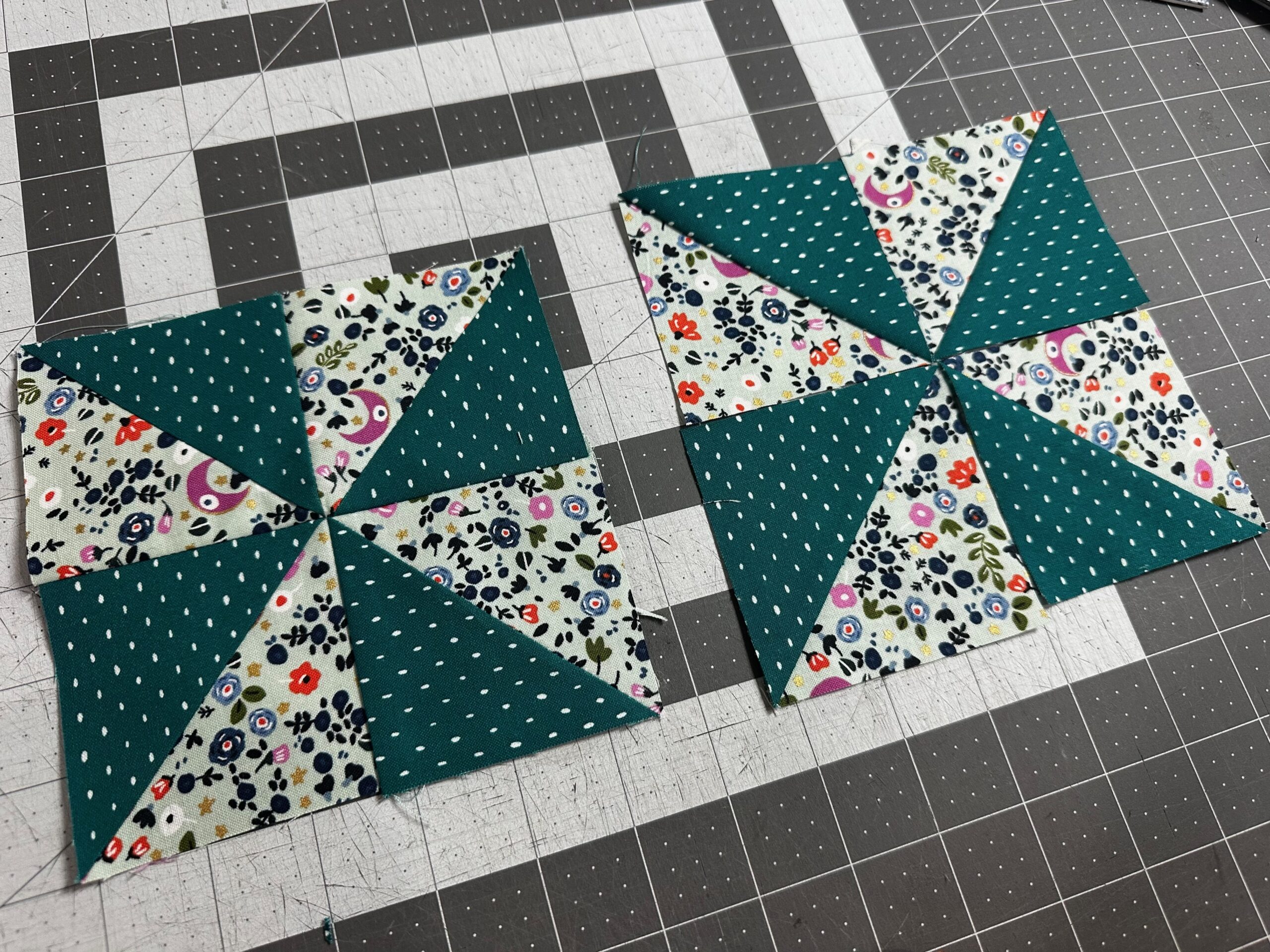
Few quilt blocks are as cheerful and versatile as the pinwheel block. With its spinning design and endless color combinations, it adds motion and personality to any quilt. Whether you’re making a baby quilt, a table runner or a full bed quilt, the pinwheel block is a fantastic go-to pattern that never goes out of style.
To celebrate National Quilting Month, we’re highlighting this block, made using a simple piecing trick that creates eight half-square triangles (HSTs) from just two fabric squares. This assembly-line piecing style helps you create two pinwheel blocks quickly, efficiently and accurately. (If you missed our half-square triangle primer, take a look here.)
Let’s take a look at how easy the pinwheel block is to make, and how many different quilt designs you can create with it.
Why We Love the Pinwheel Block
The pinwheel block has been a quilting favorite for generations, and it’s easy to see why:
-
Beginner-friendly construction
-
Great for using scraps
-
Works with bold prints or solids
-
Creates movement and visual interest
-
Endless layout possibilities
Once you master the block, you can rotate, recolor and resize it to create countless quilt designs.
The Secret Method
One of the fastest ways to make a pinwheel block is by using the 8-at-a-time HST method. With just two fabric squares, one light and one dark, you can create all the half-square triangles needed for multiple pinwheel blocks in just a few steps.
Step 1: Start with Two Squares
Cut two fabric squares the same size. One will be your background or contrast fabric, and the other will be your feature fabric.
Place the squares right sides together. Draw an “X” corner to corner across the top square.
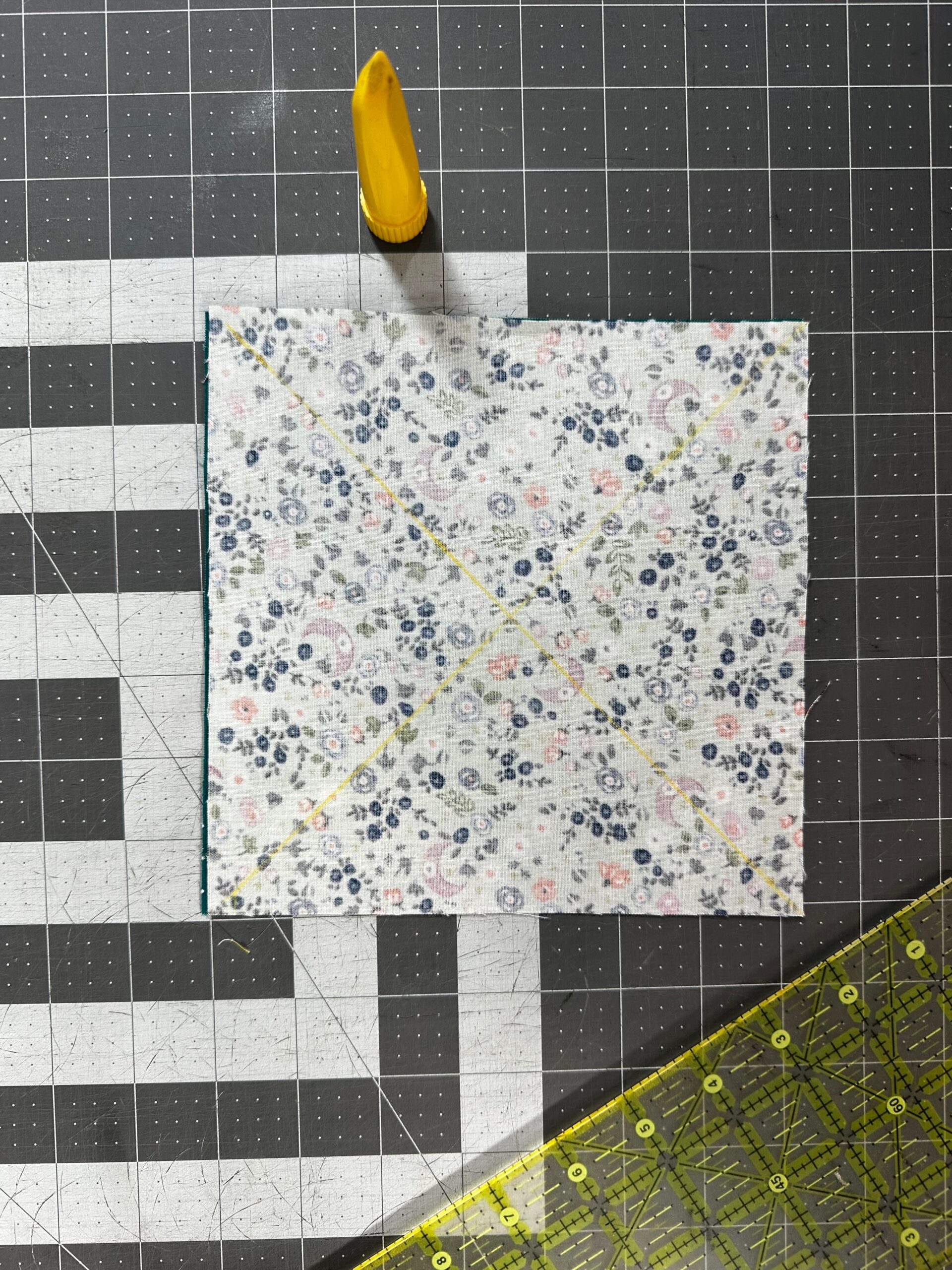
Step 2: Sew
Then sew ¼” on both sides of each drawn line.
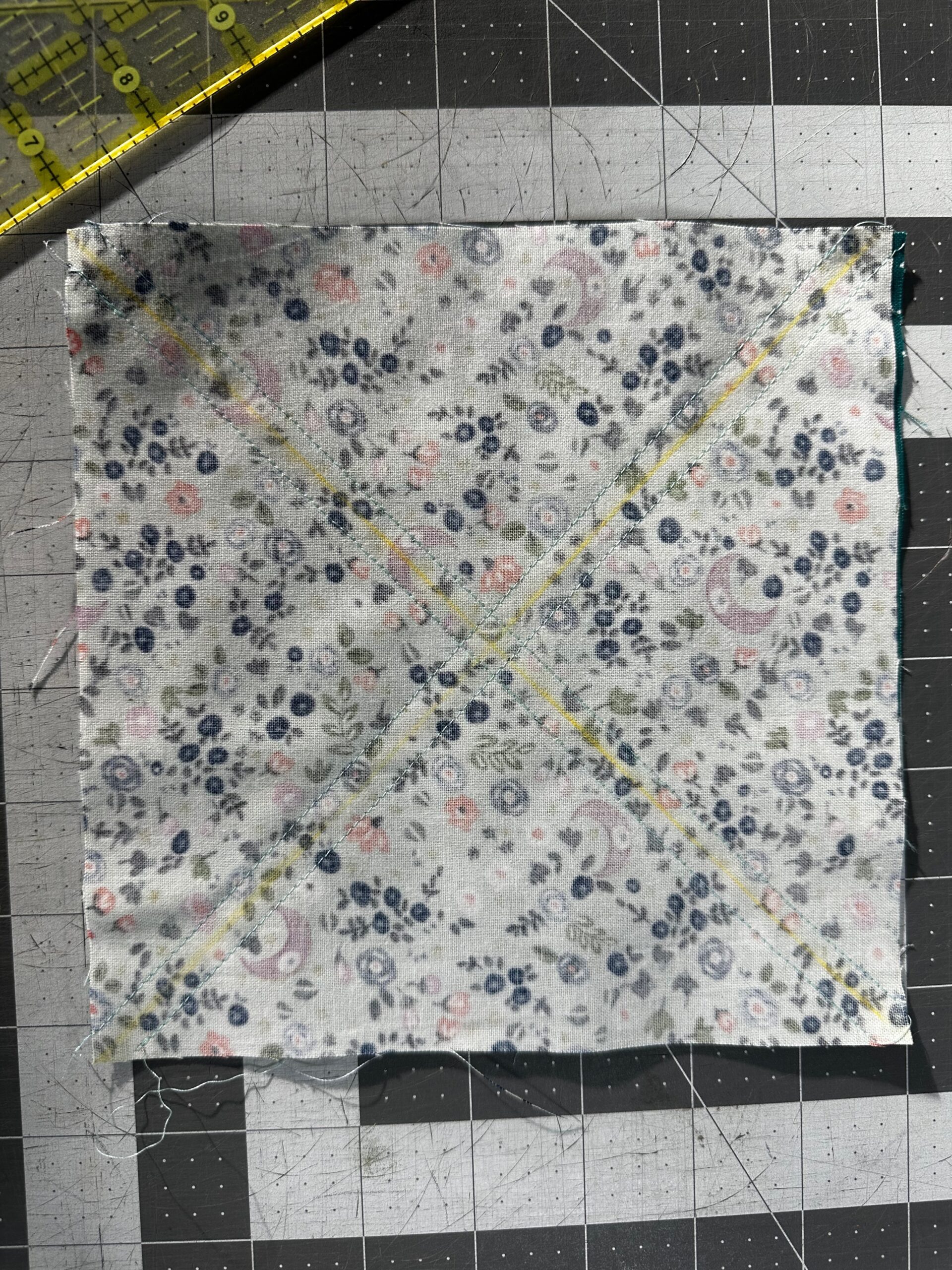
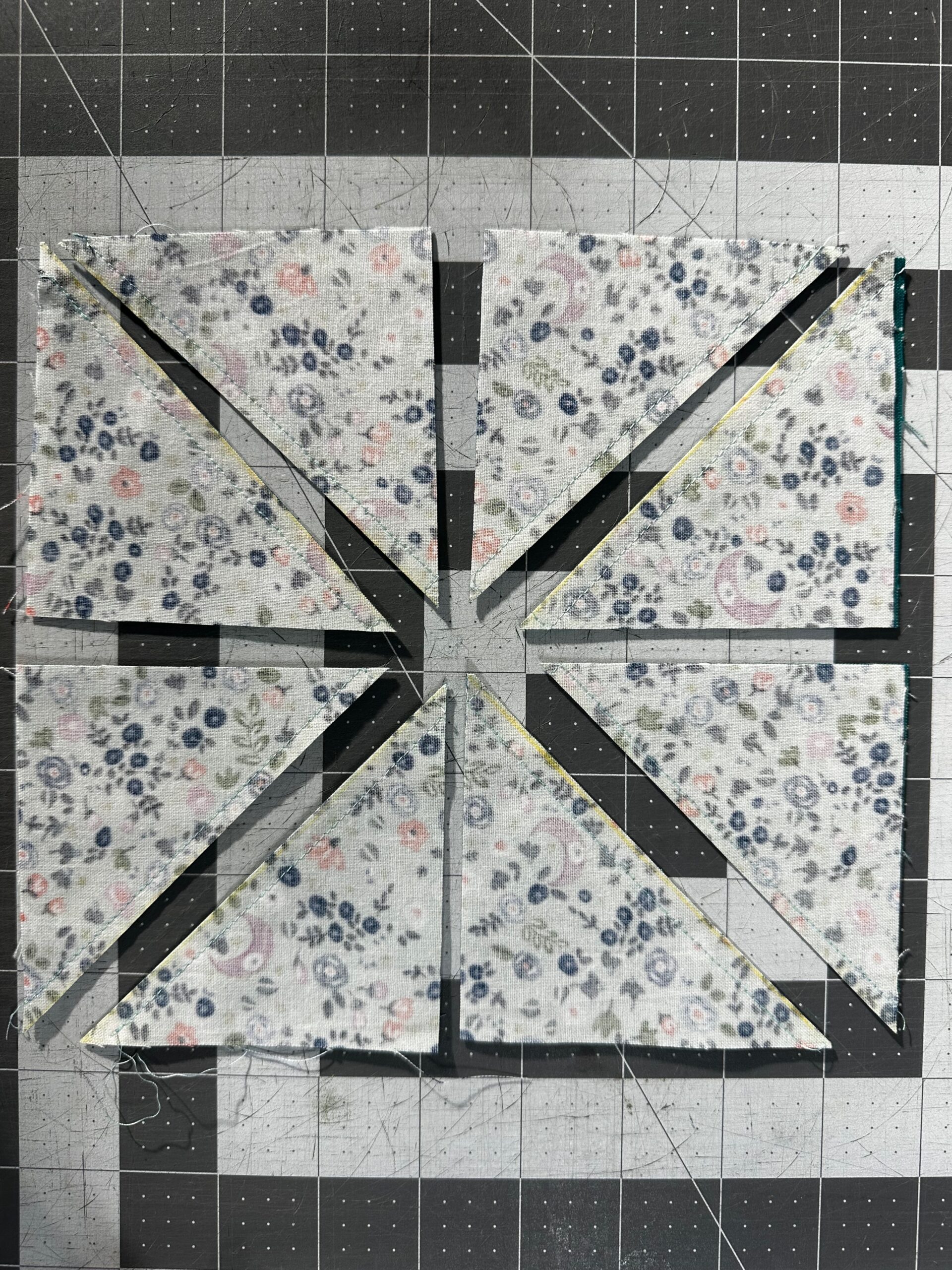
Step 3: Cut to Create Eight Units
Now cut between the stitching lines:
-
Down the vertical center
-
Across the horizontal center
-
Along both drawn diagonal lines
You’ll end up with eight half-square triangles.
Press the seams open or to the darker fabric.
Build the Pinwheel Block
A classic pinwheel block uses four HSTs. So you can create two with the 8 HSTs you just created.
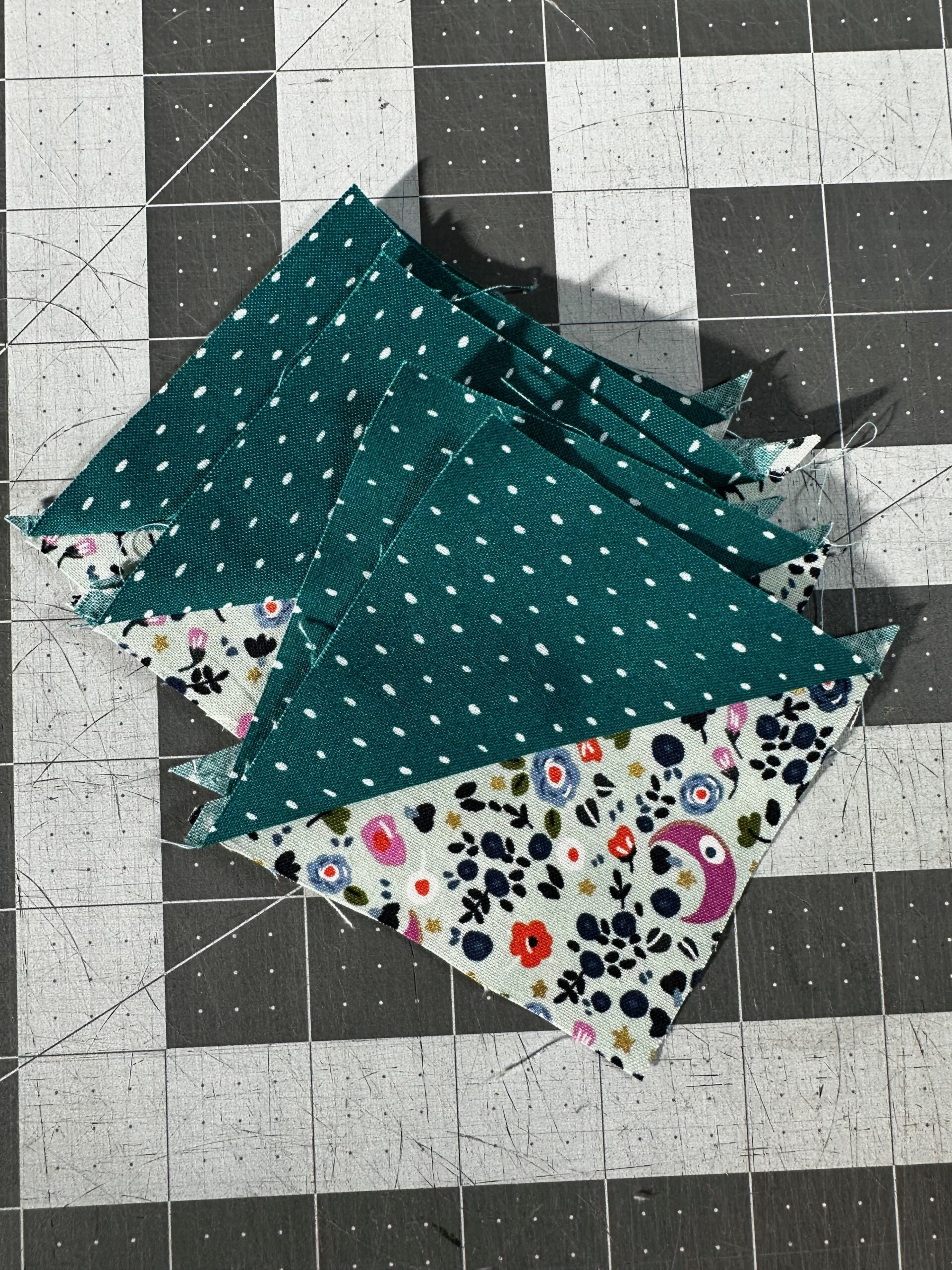
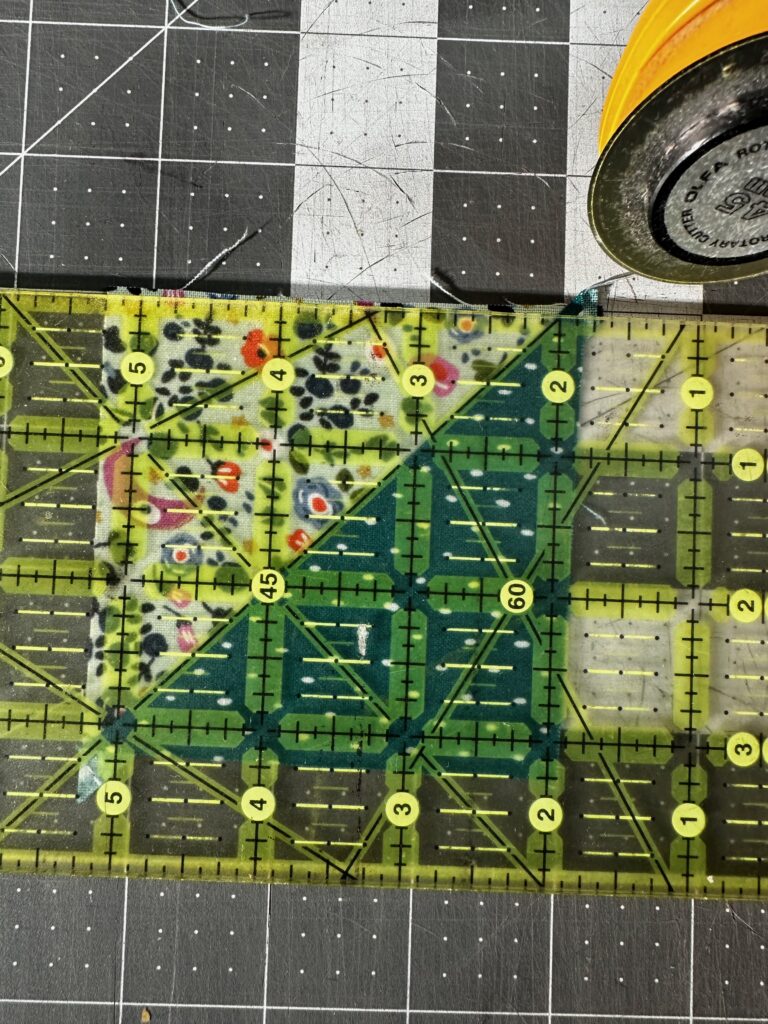
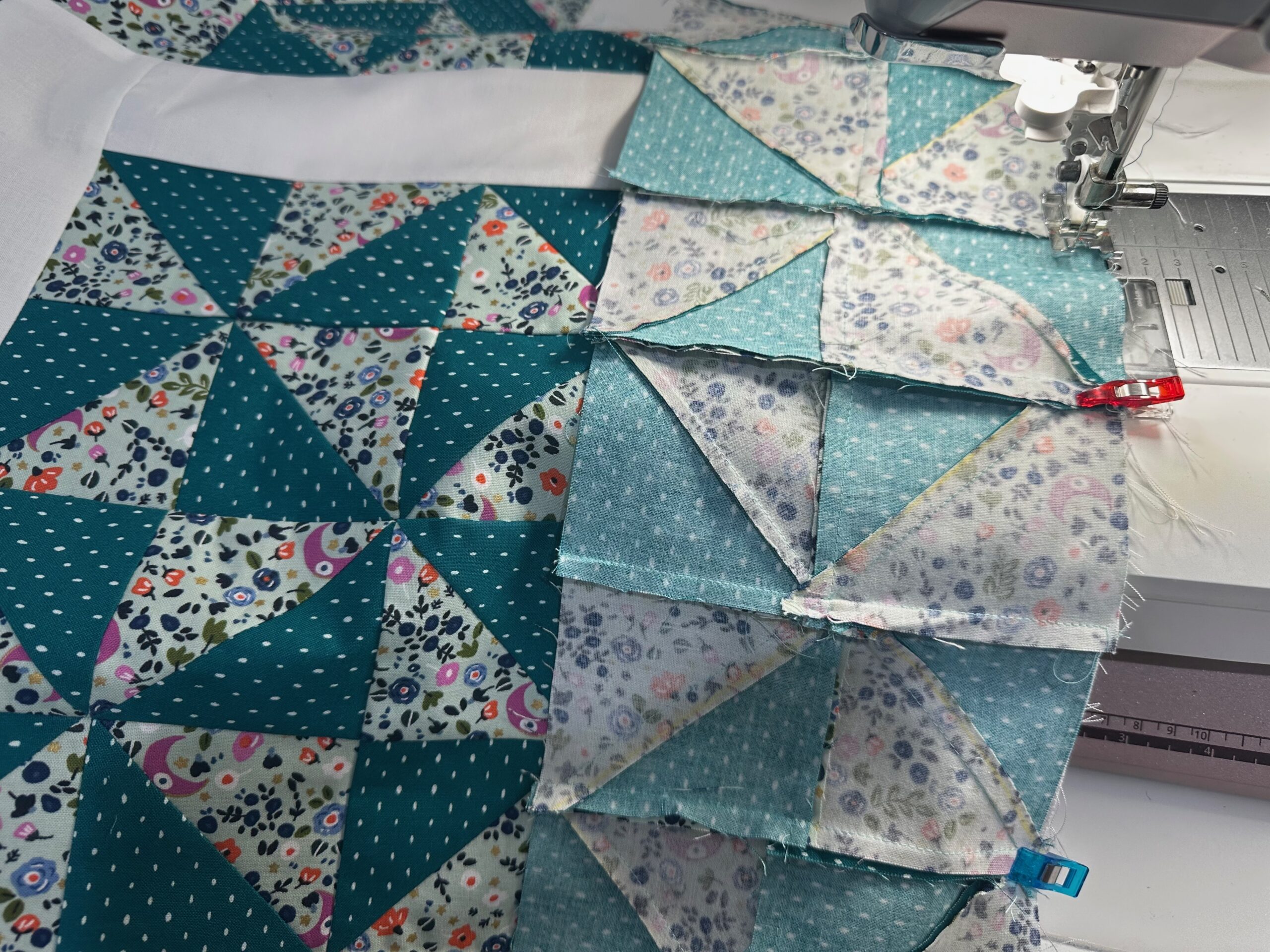
Trim each HST to get rid of the “dog ears” pointing out beyond the perimeter. Be sure to trim evenly to not compromise the block. Place the 45 degree line of your clear ruler along the center seam, if possible.
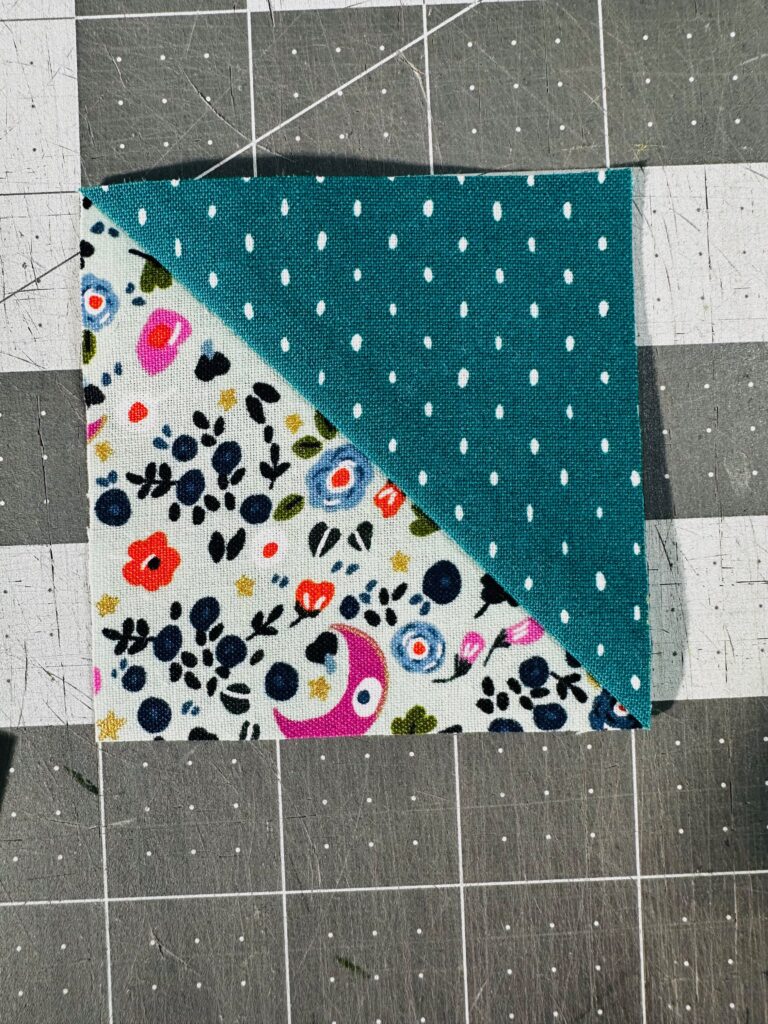
Lay out four units so the darker triangle “spins” in the same direction. Once arranged, sew the HSTs together in pairs, then join the rows to complete the block.
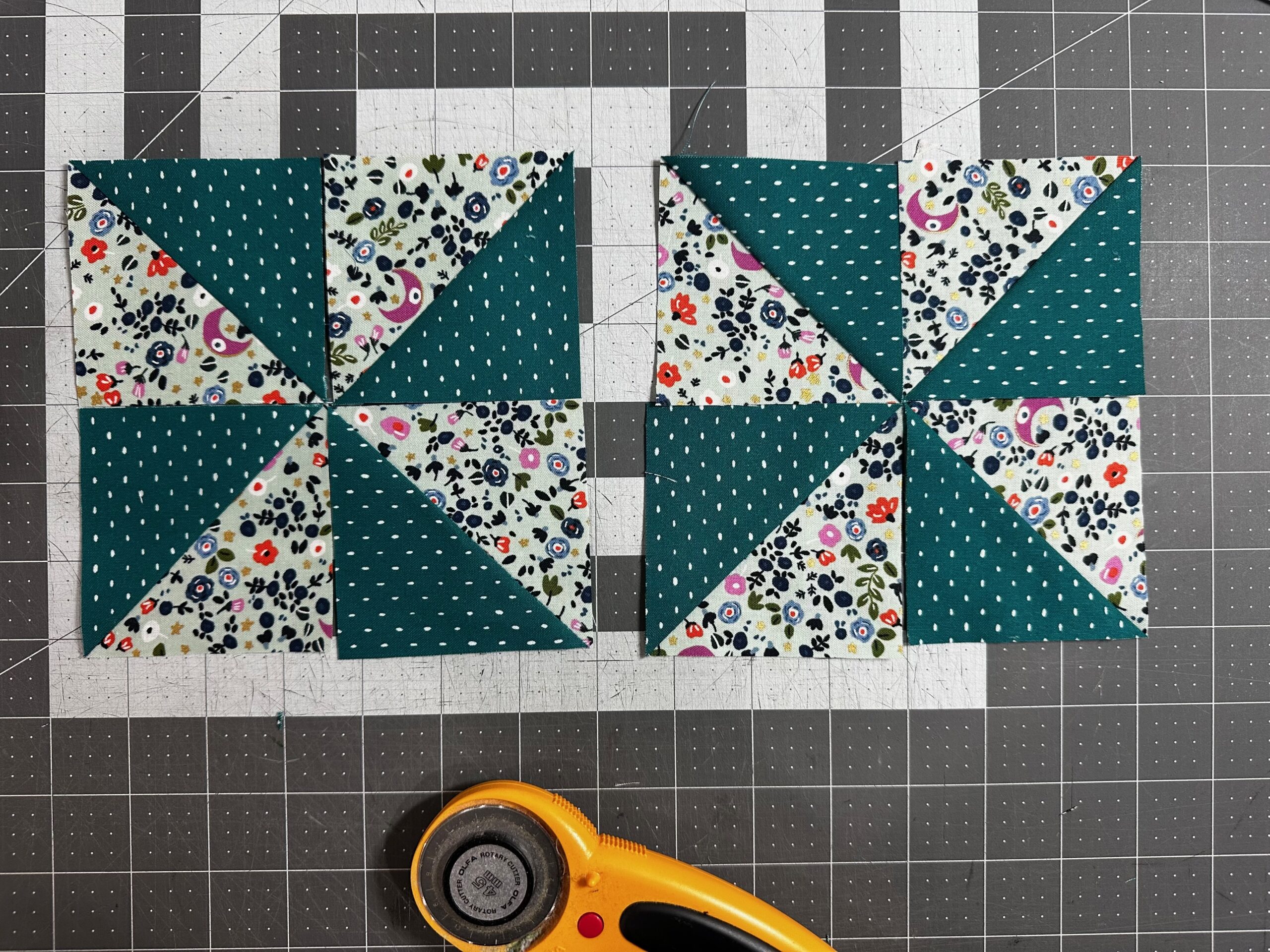
That’s it! Two pinwheel blocks are finished!
Playing with Pinwheel Block Layouts
Once you have a stack of pinwheel blocks, the design possibilities really open up. Here are just a few ideas.
Classic Pinwheel Quilt
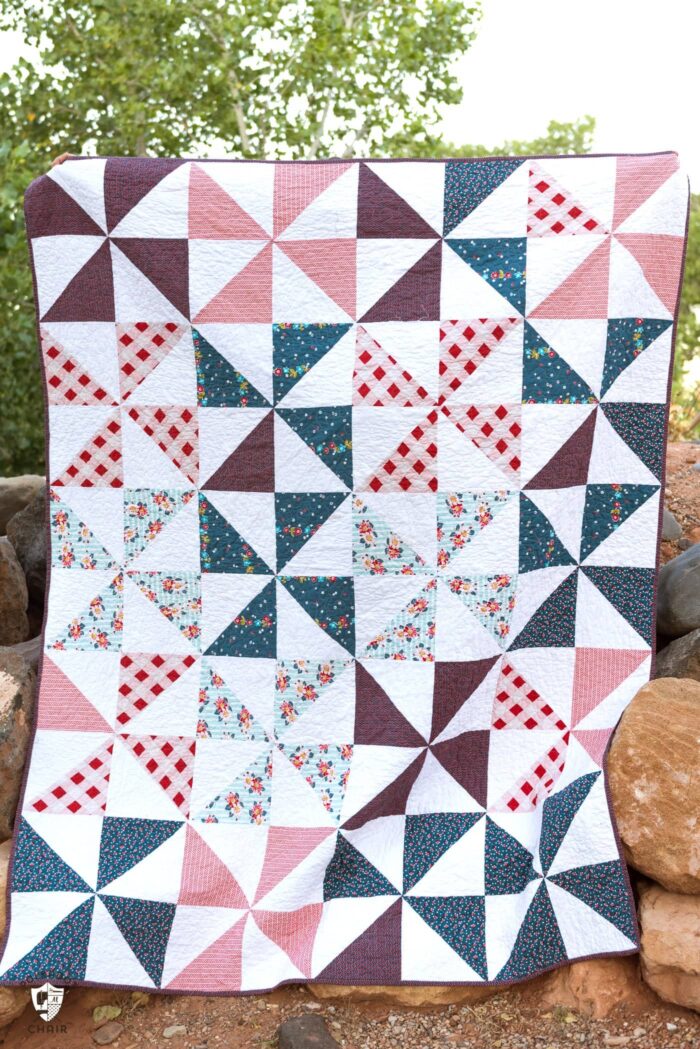
Arrange the blocks in a simple grid using a variety of print fabrics with a solid in the same place of each block. This creates a clean, timeless quilt. The Polka Dot Chair has a great, beginner-friendly tutorial (quilt shown below, courtesy of Polka Dot Chair).
Alternating Blocks
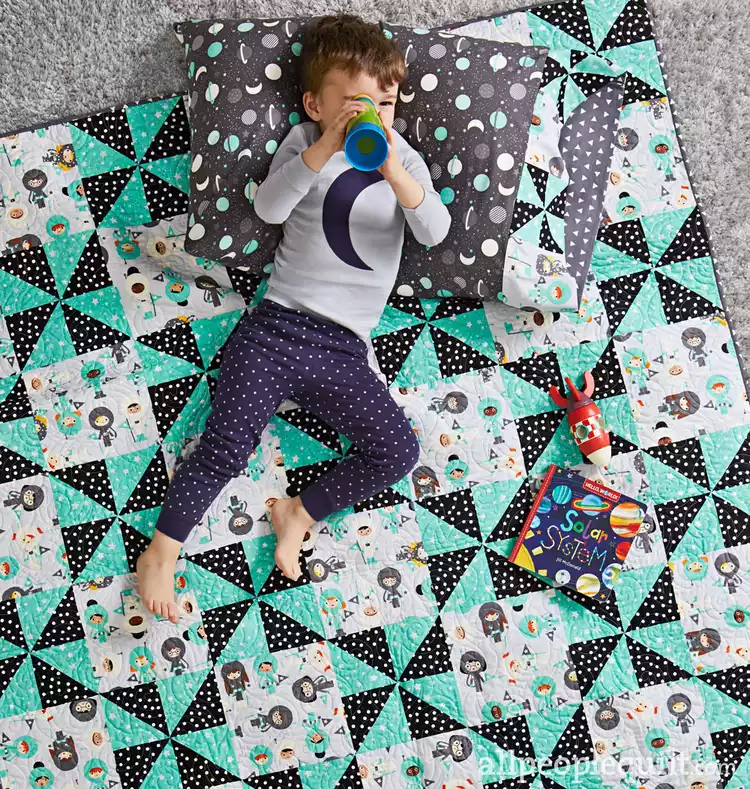
Add solid blocks or simple squares between pinwheels for a lighter, more modern look. The Pinwheel Pals pattern by American Patchwork & Quilting is a fun make that looks great in so many fabric combinations. (Quilt shown below, courtesy of American Patchwork & Quilting)
Scrappy Pinwheels
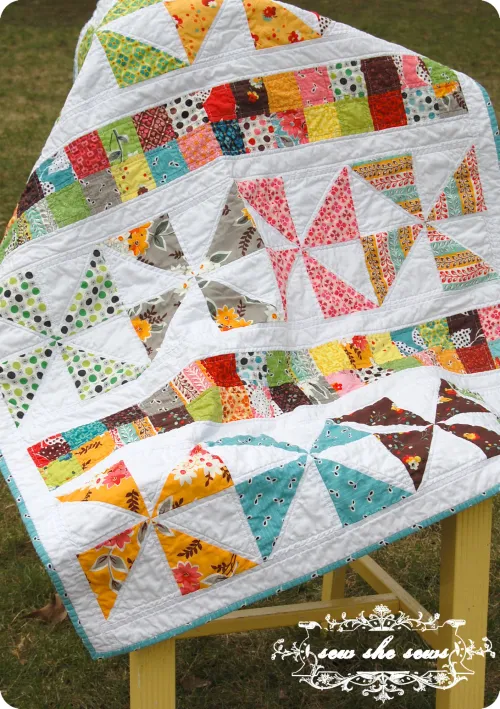
Use different fabric combinations in each block and add patchy borders for a lively, colorful quilt that showcases your fabric stash. This Pinwheels & Postage Stamps quilt pattern, shown below, by Sew She Sews is a great example.
Framed Pinwheels
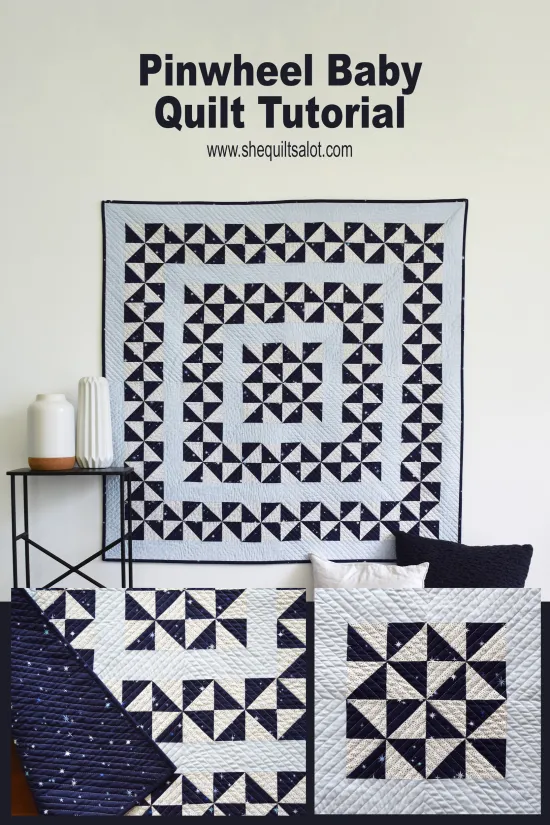
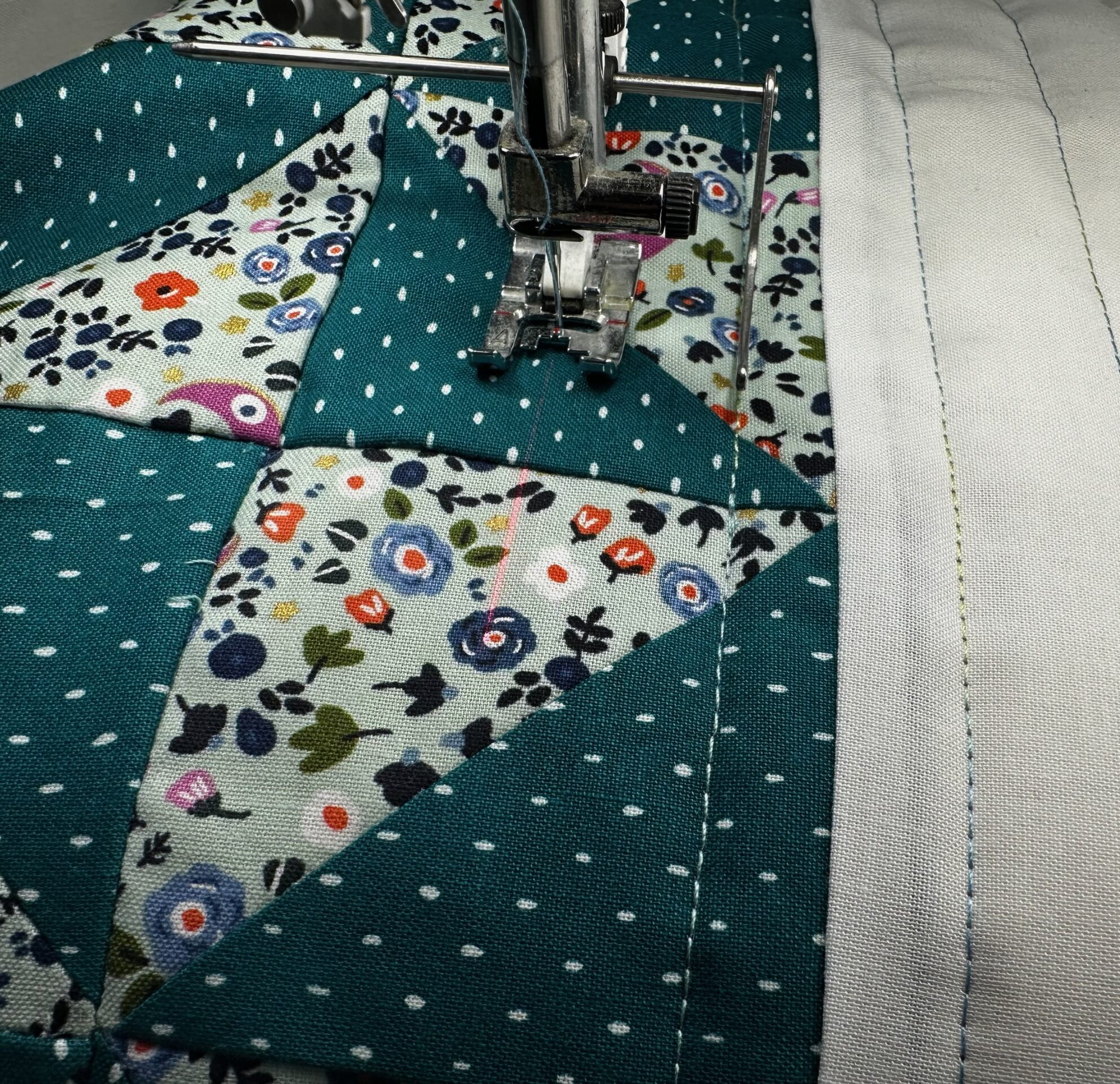
Add sashing or borders around each block to highlight every individual pinwheel. The featured quilt in this post is made with borders, which helps break up the busy fabric pattern and gives you a nice area for heavier quilting. The free pattern is available from SheQuiltsaLot.
What Thread to Use for Pinwheel Blocks?
When it comes to piecing pinwheel blocks, you want a lightweight yet strong thread that will not create thread “bumps” in the center of each block. (This is why it’s also important to press the center seams in different directions! To press pinwheel blocks flat, spin the center seam by opening the seam allowances in a clockwise or counter-clockwise direction, creating a tiny pinwheel on the back. This technique removes bulk, improves accuracy, and ensures a flat, crisp finish.)
Sulky 50 wt. Cotton Thread is the best choice for piecing, especially when there is a lot of bulk to contend with. This thread is 100% Egyptian cotton, long staple and beautifully matte.
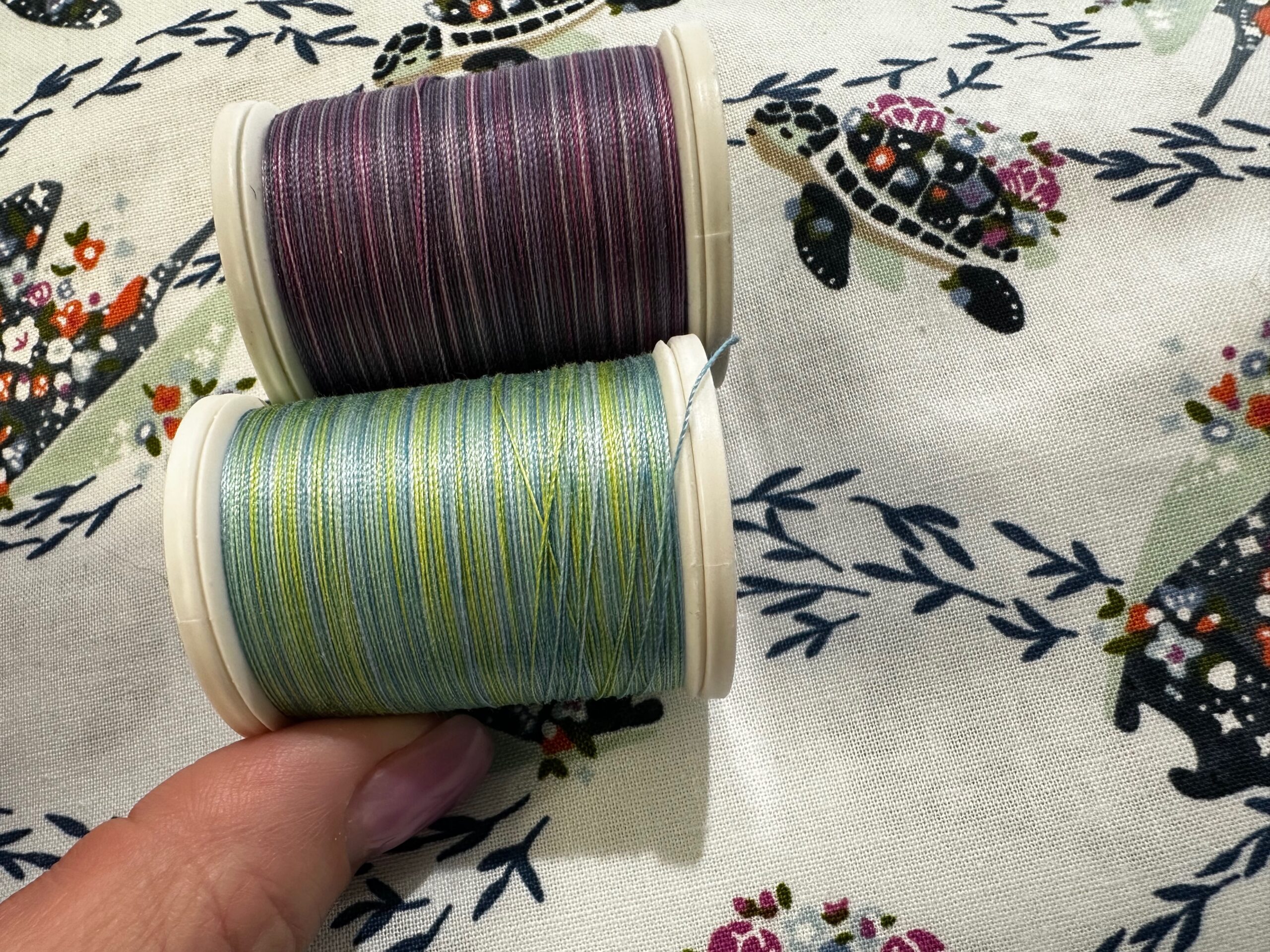
For quilting, you can use the same 50 wt. Cotton Thread if you want the quilting stitches to blend into the fabric and be almost invisible. Or, choose Sulky 30 wt. Cotton Thread (Blendables® varieties are always a good choice) for quilting that pops off the surface as a decorative addition.
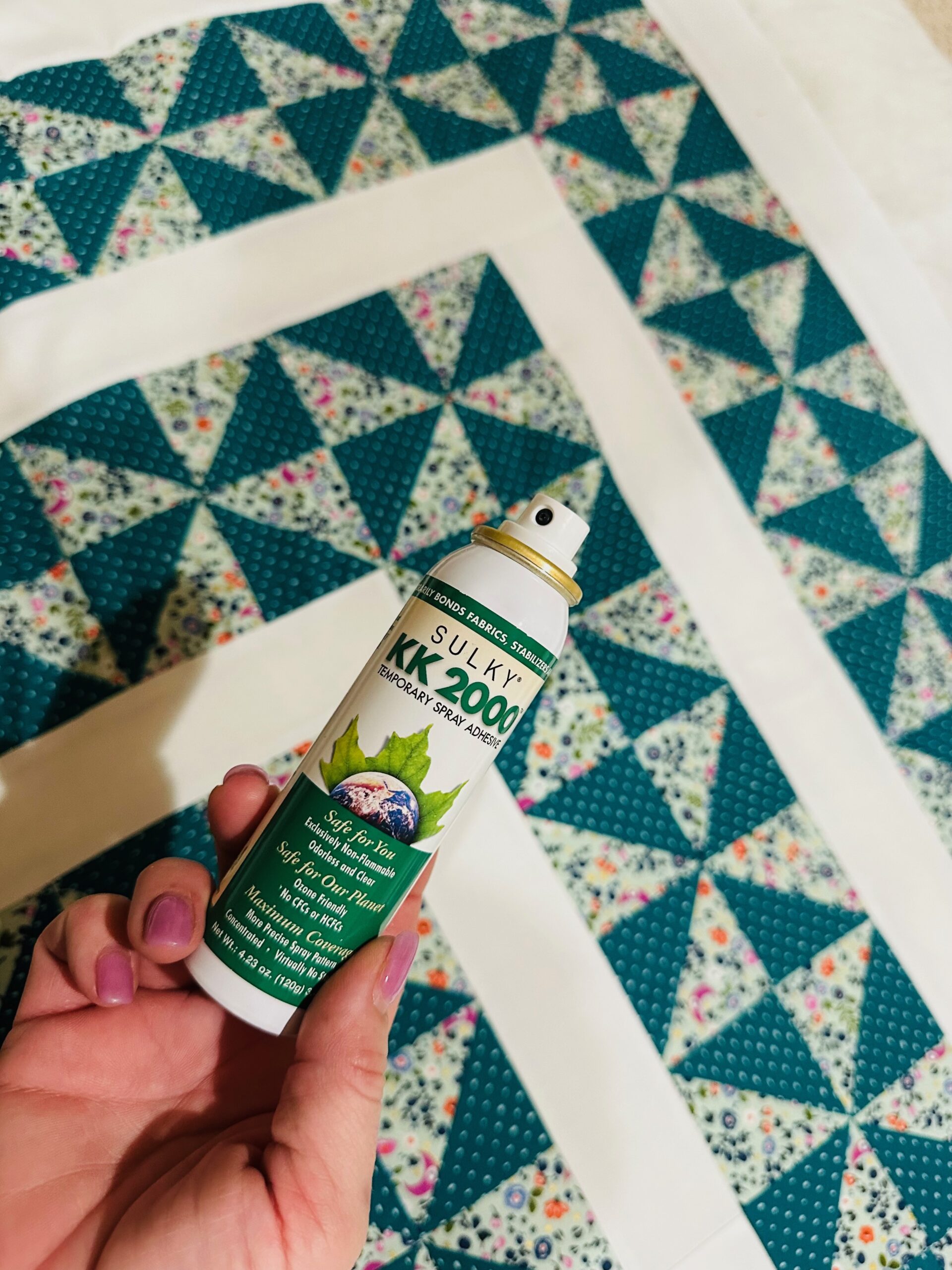
Be sure to spray-baste and pin the quilt sandwich before quilting to secure the layers and reduce shifting. Begin in the center of the quilt and work outward, adjusting the layers as needed.
Straight line quilting is a great option for simple, beginner-friendly quilts. After basting, roll the quilt sides so they’re out of the way of the needle and taut enough to control the stitching best. Choose a 3.0mm or 3.5mm stitch length and begin quilting a straight line down the vertical center of the quilt. Then, quilt another straight line about 3″ to 5″ away from the first. Continue to quilt the entire surface. Then, come in and add more straight lines about every 1″, between the previous quilting lines. Don’t worry if your rows aren’t absolutely perfectly equidistant. If you make them all approximate, small imperfections will go unnoticed.
A Block You’ll Use Again and Again
The beauty of the pinwheel block lies in its simplicity and versatility. Once you learn the easy method for creating eight half-square triangles from two squares, you can quickly produce a stack of blocks ready for endless quilt designs.
Whether you keep the layout traditional or experiment with new arrangements, the pinwheel block is one of those timeless quilt elements that never loses its charm.