
Sulky Glowy Thread Effects
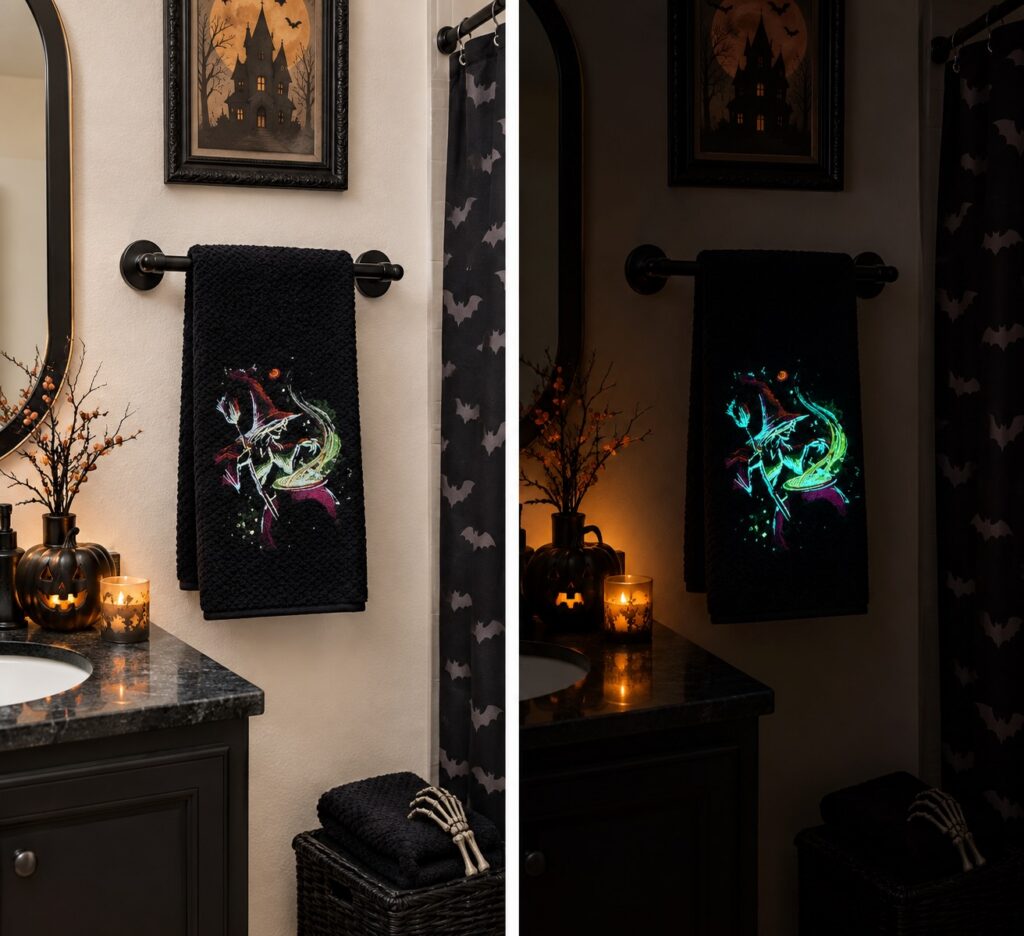
Create a Spooky Towel That Comes Alive in the Dark
Welcome back to Sulky Thread Effects, our series exploring how specialty threads can become an integral part of a project’s design. So far, we’ve added shimmer with Poly Sparkle™ and explored the wonderfully nubby, and brushable, texture of Filaine™. For our third installment, we’re turning out the lights. Meet Sulky Glowy™ Thread Effects.
Glowy absorbs light from natural or artificial sources and then emits that stored light when the surroundings go dark. Although Glowy is available in several colors, the threads glow with a greenish hue in darkness. The intensity depends on how long the thread has been exposed to light, with the glow lasting approximately 15 to 20 minutes depending on exposure. Even better for projects that will actually be used and laundered, Sulky testing has shown no loss of luminosity after 50 washings.
That’s practically an invitation to make some Halloween décor.
For this installment, we’re stitching the Urban Threads Glowing Spooky Cauldron machine embroidery design onto a plush black bath towel, using a strategic combination of Sulky Glowy Thread and Sulky 40 wt. Poly Deco™ Thread. For more on embroidering towels, join our All the Towels embroidery session, in partnership with Urban Threads and Embroidery Library. You’ll learn how to embroider all sorts of towel types, with the right needle, thread and stabilizer combination. REGISTER NOW>
THREAD EFFECT: SULKY GLOWY
Glowy is one of those threads that brings an element of surprise to a project. In a lit room, you see colorful embroidery. Turn off the lights, and selected areas suddenly illuminate.
Light from the sun or an artificial source is stored in the thread and released in darkness, producing that wonderfully eerie glow. Halloween is an obvious opportunity, but Glowy can add an unexpected effect to all kinds of projects, including costumes, accessories, home décor, quilts, sportswear and even embroidered logos.
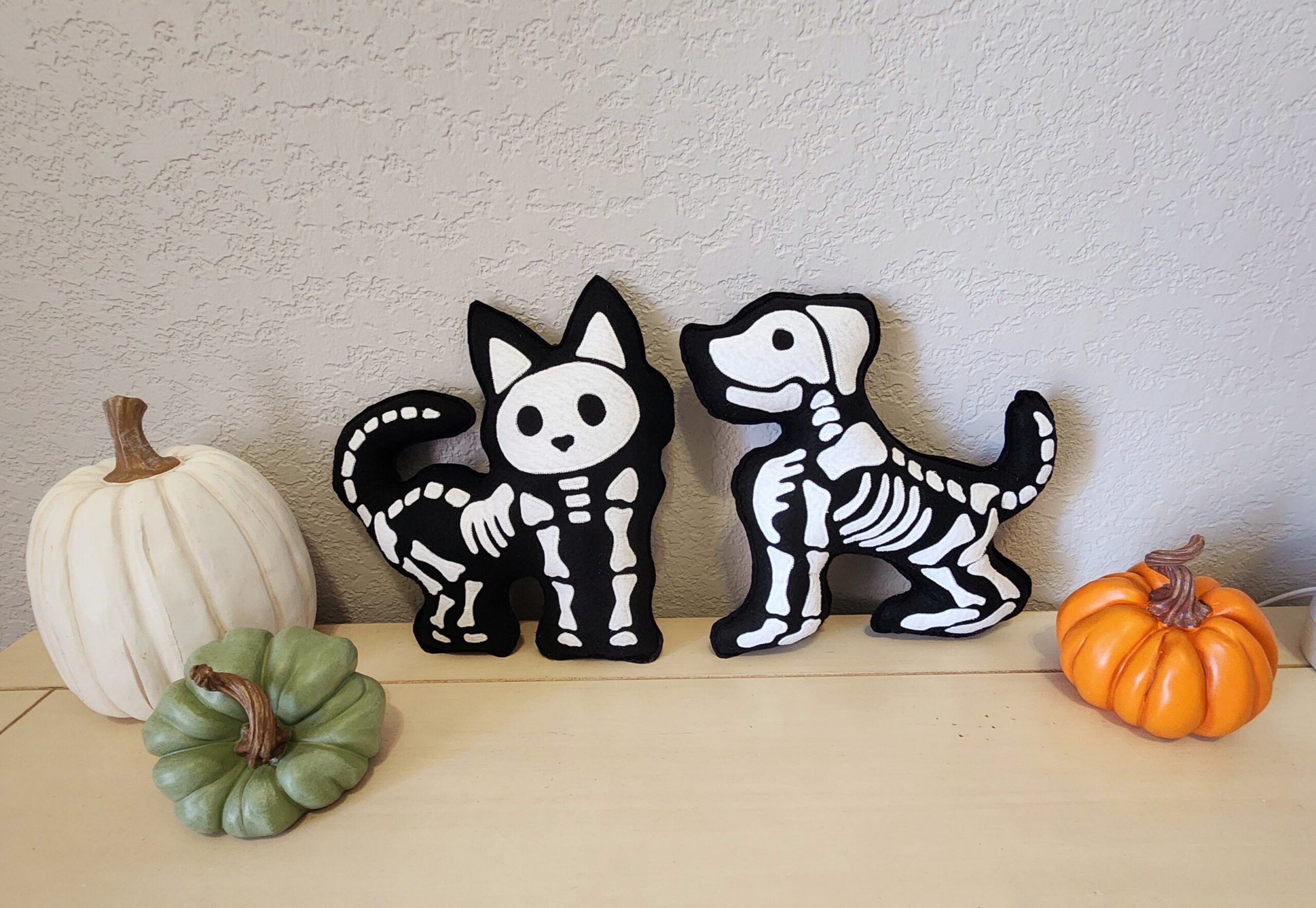
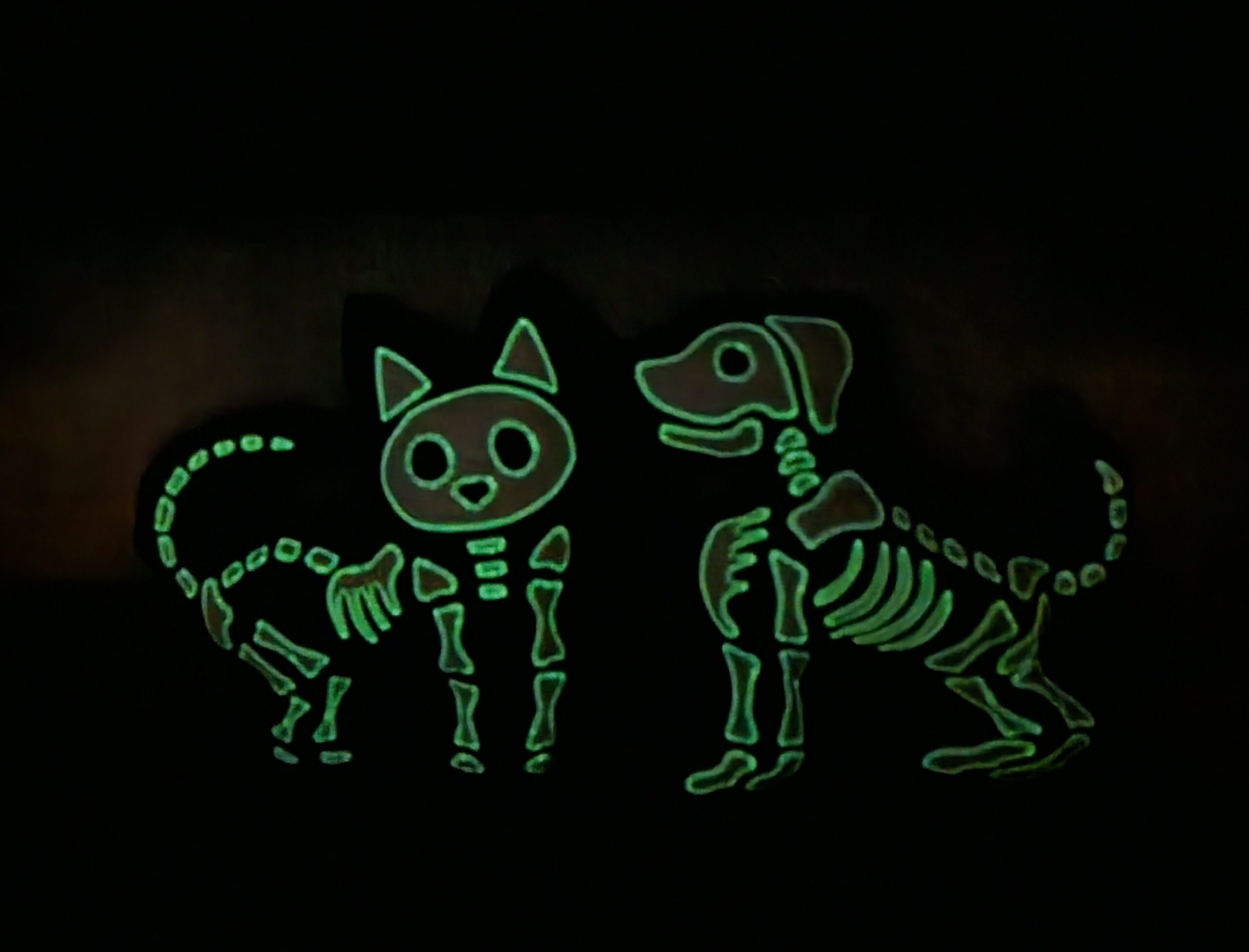
For this project, though, we’re embracing the spooky possibilities.
THE PROJECT: GLOWING SPOOKY CAULDRON TOWEL
The Glowing Spooky Cauldron design from Urban Threads features a witch brewing something mysterious over a cauldron, surrounded by a crescent moon, sparkling accents and curling steam.
Better yet, the design was practically made for a Thread Effects experiment.
Urban Threads recommends embroidering the design on dark-colored fabric because the fabric shows through the design’s open areas. It’s available in three sizes:
- 9.68″ x 6.85″
- 7.8″ x 5.52″
- 6.85″ x 4.85″
We’re stitching it on a plush black bath towel. The black background makes the bright embroidery pop during the day—and provides the perfect dark backdrop for the Glowy sections when the lights go out.
GET THE GLOWING SPOOKY CAULDRON DESIGN
THE SECRET: DON’T MAKE THE WHOLE DESIGN GLOW
It might be tempting to see a design called Glowing Spooky Cauldron and immediately swap every thread color for Glowy. Resist the temptation.
This is a perfect example of an important principle of working with specialty threads: More isn’t always more.
Glowy threads come in different colors, which means they’re fun to coordinate when you’re looking at the project in daylight. But in darkness, all Glowy colors emit a similar greenish glow. And that creates an interesting design challenge.
If we stitch too much of this multicolor embroidery with Glowy, the different areas won’t have enough visual contrast when the towel is displayed in a lit room. In the image below, the towel on the left (done all in Sulky Glowy) is drastically different from the towel on the right.
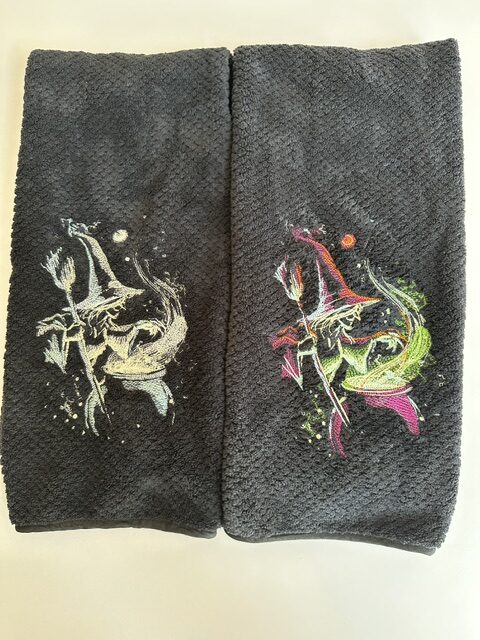
And when the lights go out, the glowing portions may begin to visually blend together. In the image below, the towel on the left was stitched in all Glowy, and the towel on the right was stitched with only a few portions done in Glowy and the rest done in 40 wt. Poly Deco Thread. Notice the difference when the towels are glowing in the dark.
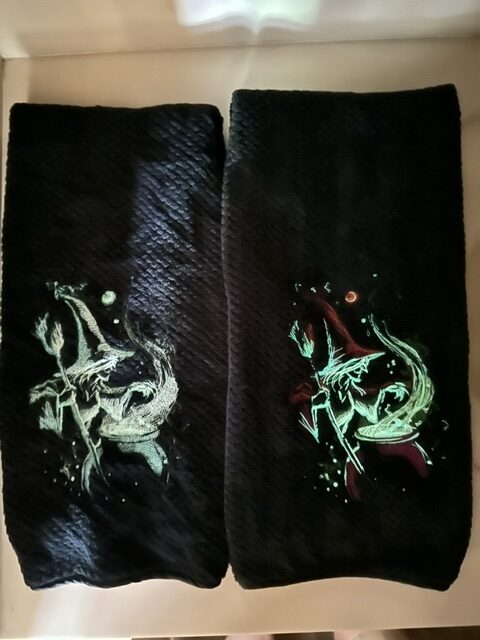
Depending on your project, it may be best to use Sulky 40 wt. Poly Deco Thread for the majority of the embroidery and substitute Glowy for just a few carefully chosen areas. That way, the design works in two different lighting conditions.
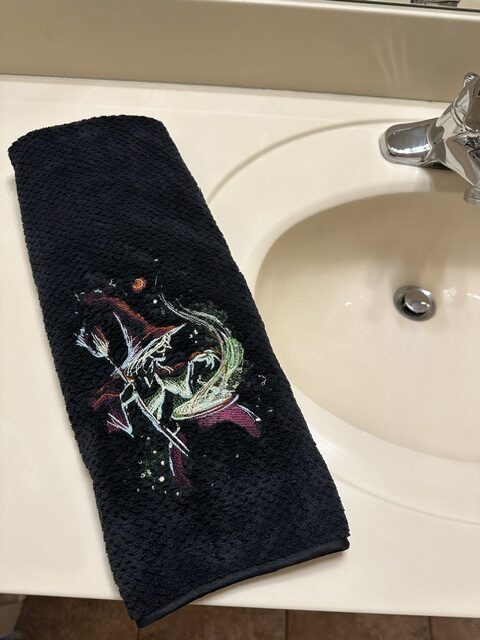
LIGHTS ON
The Poly Deco colors provide definition, contrast and detail against the black towel, while the Glowy thread colors coordinate with the overall embroidery.
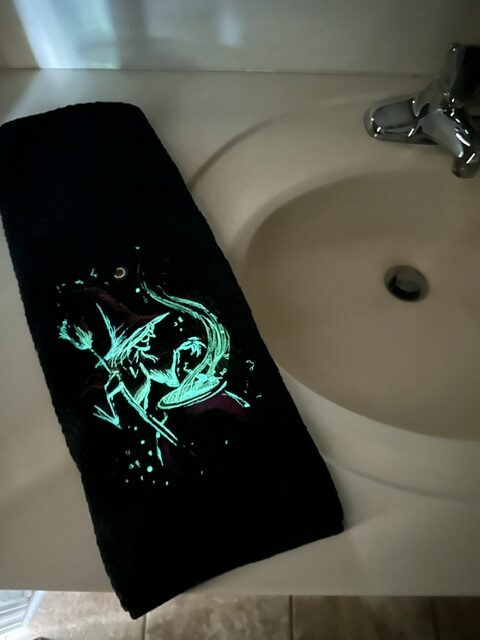
LIGHTS OFF
Only the Glowy sections emerge from the darkness. Suddenly, the embroidery has a second personality. That’s the effect we’re after.
CHOOSING WHICH PARTS SHOULD GLOW
The Urban Threads design contains nine thread colors and uses those colors throughout the witch, broom, cauldron, moon, steam and sparkling details. Before stitching, study the color-change sheet and decide which elements you want to become the nighttime focal points. Think about the story the embroidery tells.
Perhaps the cauldron’s mysterious brew glows. Maybe it’s the curling steam. Perhaps the moon and magical sparkles illuminate when the lights go out.
Or select a combination of small highlights throughout the design so little details seem to appear from nowhere in darkness.
Whatever you choose, keep some areas stitched entirely in Poly Deco. The contrast between glowing and non-glowing areas is what creates the magic.
THREAD EFFECTS TIP: Specialty thread is often most effective when you give it something ordinary to contrast against. Using Glowy selectively makes the glowing portions feel much more intentional.
SUPPLIES
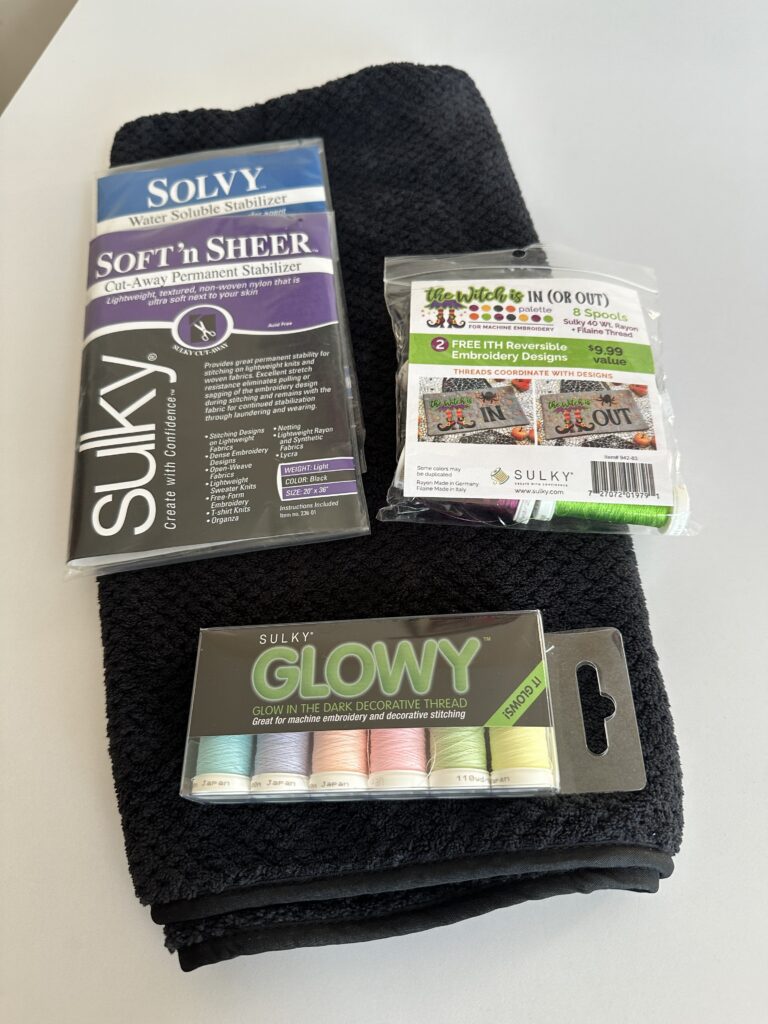
- Plush black bath towel
- Urban Threads Glowing Spooky Cauldron machine embroidery design
- Sulky Glowy Thread in selected colors
- Sulky 40 wt. Poly Deco Thread in coordinating colors (featured colors were included in the Witch is In/Out Machine Embroidery Palette)
- Sulky Soft ‘n Sheer™ Cut-Away Stabilizer (Black)
- Sulky Solvy® Stabilizer
- Sulky 60 wt. Bobbin Thread (Black, to match towel)
WHY SOFT ‘N SHEER EXTRA?
A towel isn’t just decorative. It’s going to be handled, folded, hung, used and washed—and we want the embroidery to continue looking great through all of it. That’s where Sulky Soft ‘n Sheer comes in.
Soft ‘n Sheer is a lightweight cut-away stabilizer that remains permanently with the project, providing lasting support behind the embroidery. For a project that will go through repeated use and laundering, that permanent stabilization helps the embroidery maintain its shape over time.
And because we’re working with a black towel, use black Soft ‘n Sheer.
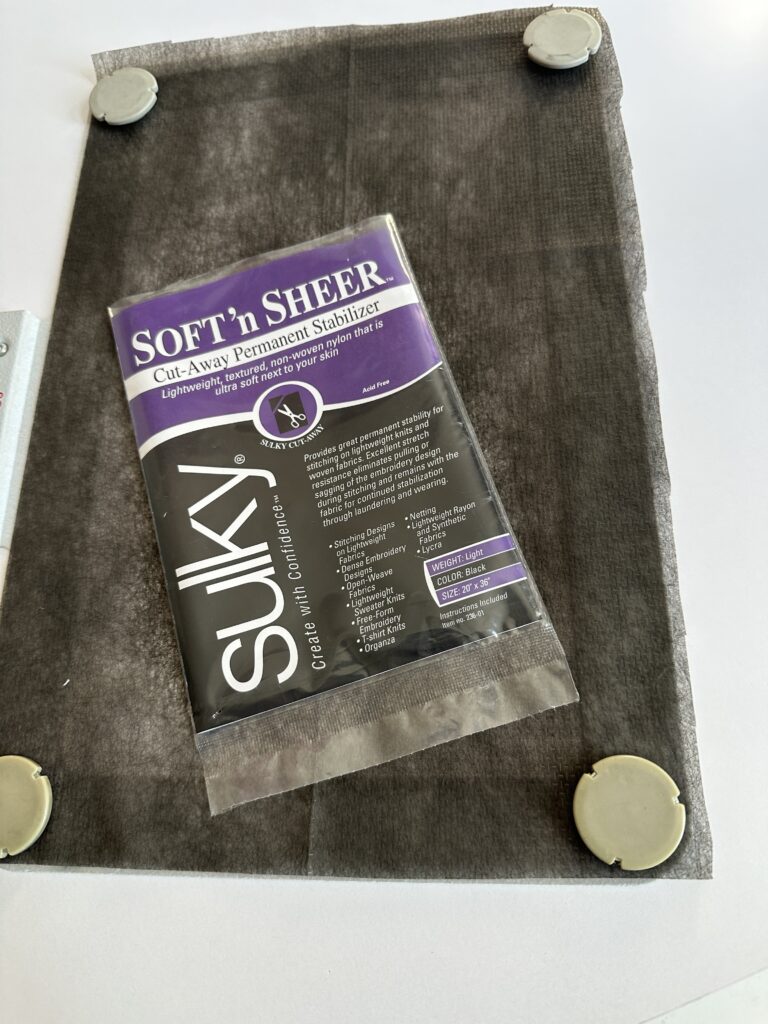
After embroidery, the excess stabilizer is trimmed away from the design. Choosing black for a black towel helps the remaining stabilizer blend into the wrong side, so there’s little to no distracting contrast behind the embroidery.
STEP 1: PREP THE TOWEL
Wash and dry the towel before embroidering if desired, particularly if you expect it to be frequently laundered after completion.
Decide where you want the embroidery positioned.
For a bath towel, placement toward one end generally allows the design to show nicely when the towel is folded or hung.
Mark the center point and orientation of the embroidery area.
STEP 2: STABILIZE
Cut a piece of black Sulky Soft ‘n Sheer Extra that’s comfortably larger than the embroidery hoop.
Position the stabilizer behind the towel.
If you have a magnetic hoop, hoop the towel and stabilizer together. Or hoop only the stabilizer and secure the towel with Sulky KK2000XT Temporary Spray Adhesive, without distorting the plush fabric.
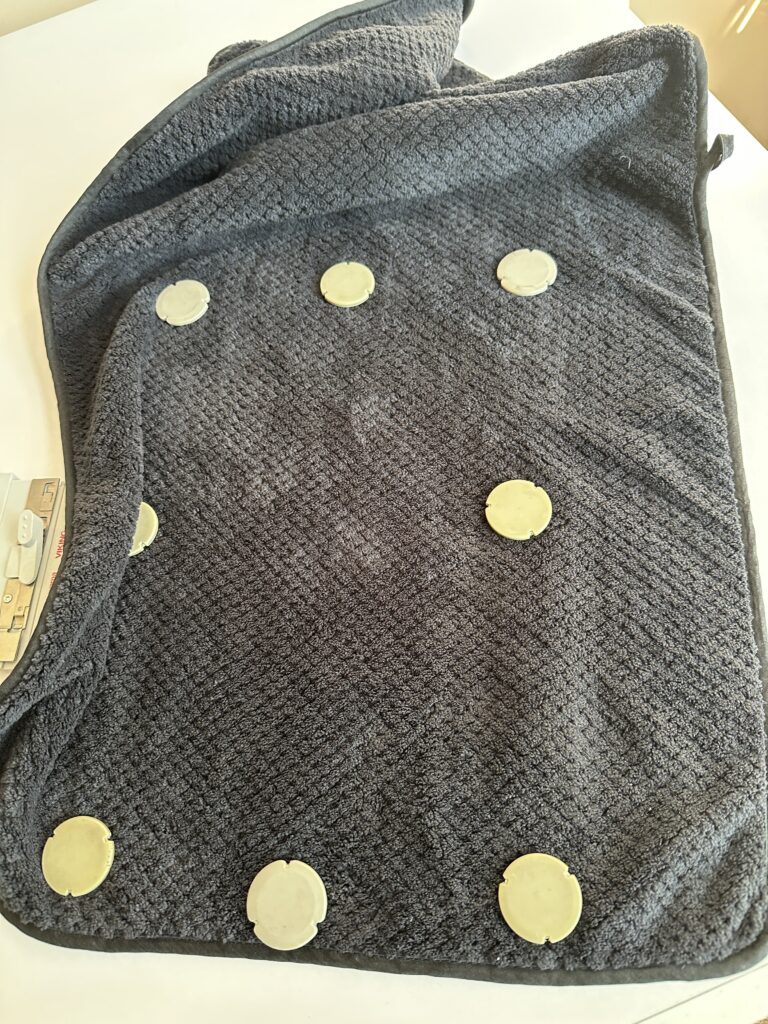
Float a piece os Sulky Solvy over the towel to prevent the thread from sinking into the towel pile during the stitchout.
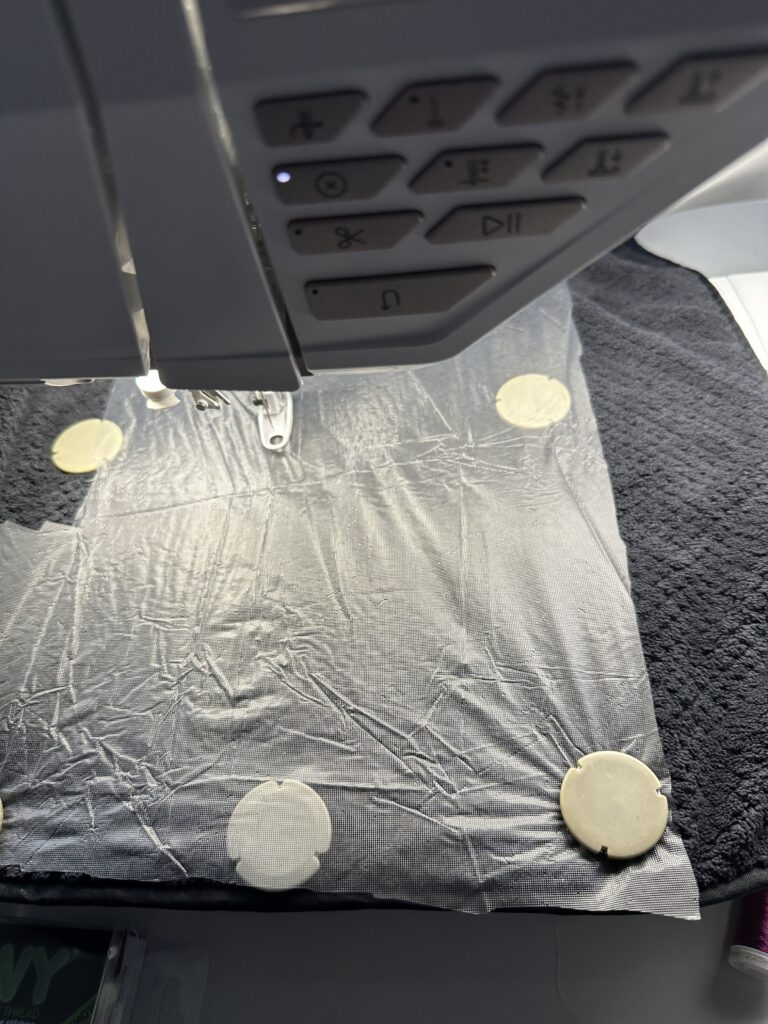
STEP 3: PLAN YOUR THREAD CHANGES
Before pressing Start, review the color-change sheet. The original design contains nine color changes, incorporating blues, violet, greens, red, gold, yellow and white throughout the various elements. Now decide where to substitute Glowy. This is the creative part.
Rather than converting all nine colors, select the areas that you want to reveal themselves in darkness. Use Poly Deco for the remaining color changes so the embroidery retains plenty of contrast and dimension when the room is lit. Keep notes beside the color-change sequence so you know exactly when to switch between Poly Deco and Glowy.
If you have software or the capability to change thread colors on the machine screen, you can reassign these colors and your machine will then read the design with the Glowy substitutes. The screen will allow you to see the changes so you can make further adjustments as desired.
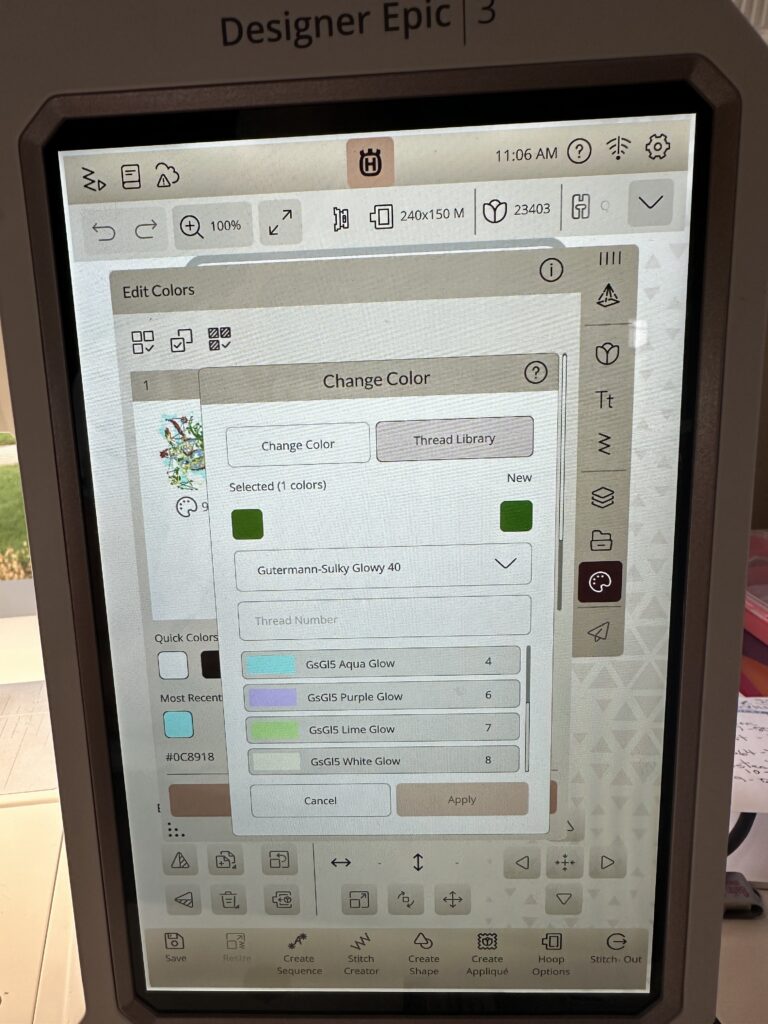
If you don’t have these capabilities on your machine or software, you can mark up the color chart instead.
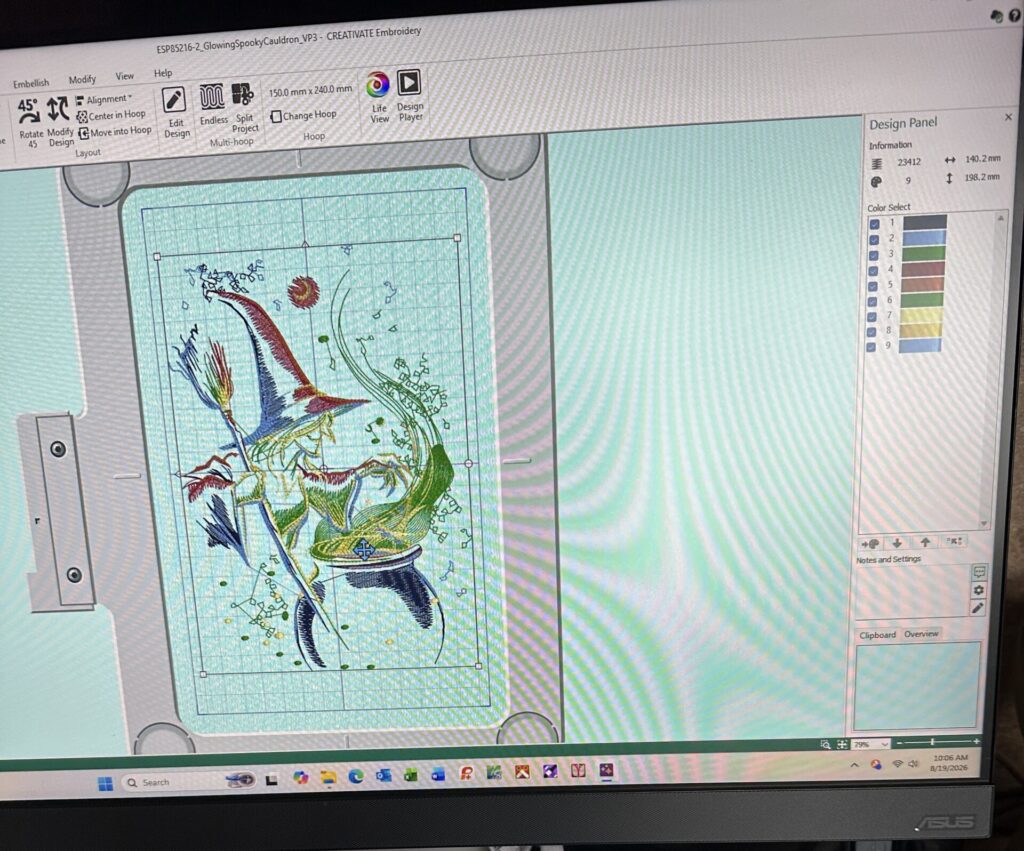
STEP 4: EMBROIDER THE DESIGN
Load Black Bobbin Thread into the machine.
Begin stitching the design according to your planned color sequence.
Use Poly Deco for the standard embroidery sections. When you reach an area you’ve designated to glow, switch to the appropriate Glowy thread.
Continue alternating between Poly Deco and Glowy according to your plan until the embroidery is complete.
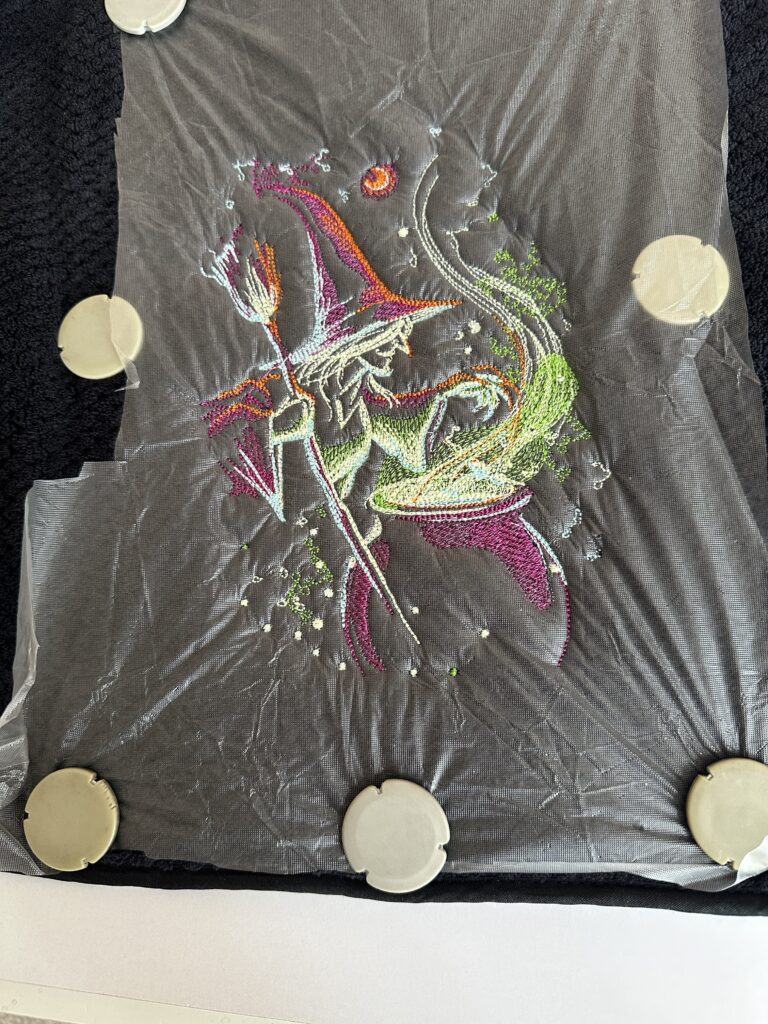
As always, test your thread, needle, stabilizer and towel combination before stitching the final project when possible.
STEP 5: FINISH
Once the embroidery is finished, remove the towel from the hoop.
Turn the towel to the wrong side and carefully trim the excess Soft ‘n Sheer Extra from around the embroidery.
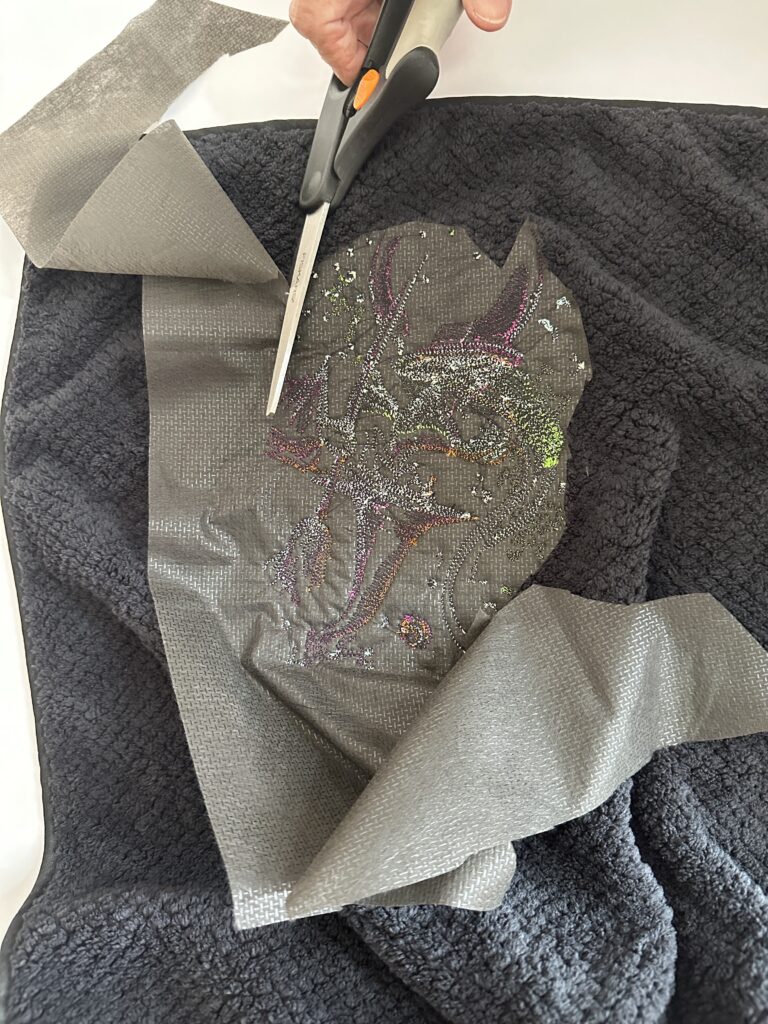
Because you’ve used black stabilizer on a black towel, the remaining cut-away support blends into the background instead of leaving a conspicuous white shape on the wrong side.
The stabilizer that remains beneath the embroidery continues doing its job every time the towel is used and washed.
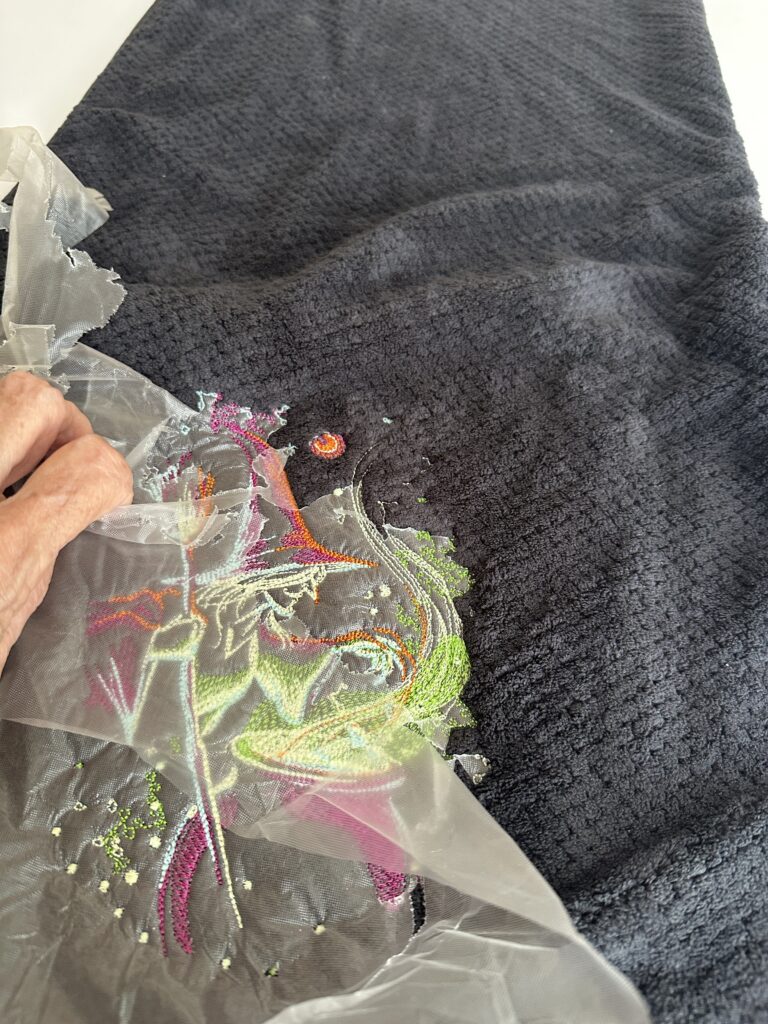
Carefully tear away the excess Solvy from the towel front.
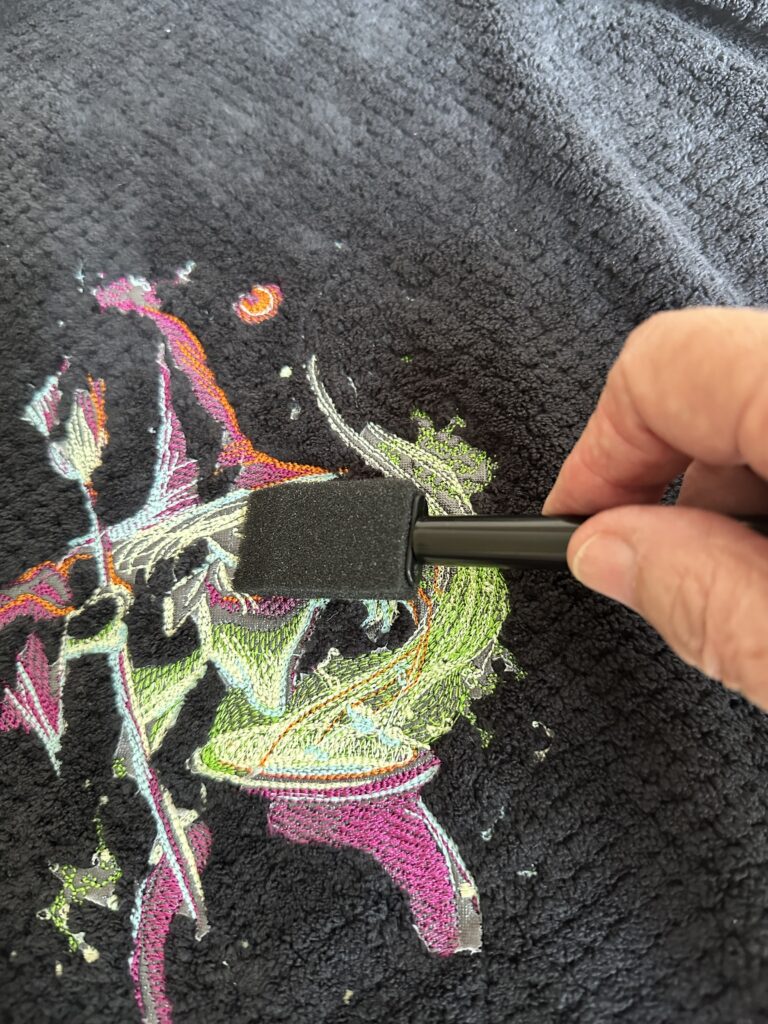
Any excess Solvy that remains is easily removed with water.
STEP 6: CHARGE THE GLOW
Now comes the best part. Expose the finished embroidery to natural or artificial light. Then turn out the lights.
The sections stitched in Glowy will emit the stored light with a greenish glow while the Poly Deco portions recede into the darkness. The intensity of the glow depends on how long the thread was exposed to light beforehand, and the effect typically lasts approximately 15 to 20 minutes.
Turn the lights back on and you have a colorful, detailed embroidered Halloween towel again.
GLOWY THREAD EFFECTS
Our Spooky Cauldron towel would still be a fun Halloween project stitched entirely in Poly Deco. But Glowy gives it something ordinary embroidery can’t: a reveal.
In daylight, Poly Deco and Glowy work together to create a colorful, detailed design against the plush black towel. When darkness falls, some of those details disappear while others suddenly illuminate. The project changes depending on its environment. And that’s exactly why we’re using Glowy selectively instead of everywhere.
The specialty thread isn’t simply replacing another thread color. It’s creating an effect. That’s the idea behind Sulky Thread Effects.
Poly Sparkle catches the light.
Filaine adds texture and can be brushed into dimensional fluff.
And Glowy?
It brings your stitches to life when the lights go out.
Stay tuned for the next installment of Sulky Thread Effects, when we’ll explore another Sulky specialty thread and a project designed to show exactly what makes it special.
